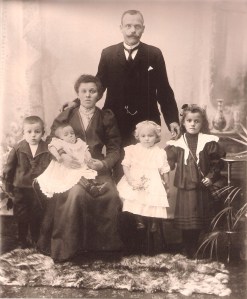
What I Didn’t Tell You Then About My Wedding…

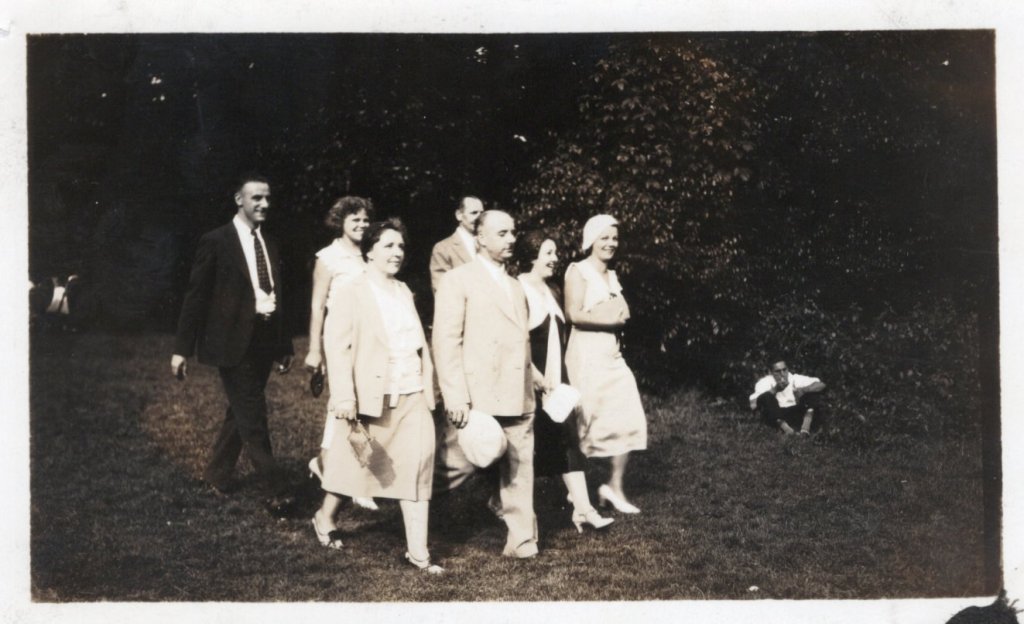
What I didn’t tell you (or anyone) then about my wedding was that Mom was there. 

Though I did tell the DJ he needed to keep the music down so people could talk; weddings should be about connections and celebrating, not yelling across the table.  I also told him to sort the music by decade so everyone at my “later in life” wedding would hear music they could dance to.

I did encourage my 8-year-old stepson to ask someone to dance, just walk up to them and hold out your hand and offer “would you like to dance with me?”, which he subsequently practiced on every woman in the room.  And I did tell him the red clip-on tie looked best, but I can tell from the photos that he alternated between the blue and red clip-ons all day long.

I did tell my 6-year-old newly declared vegan stepdaughter that she could have more of the “These are ah-mazing!” lamb chops she waved at me in her little fist as she zoomed past in the reception room.

I did suggest to my free-spirited “I’m a divorce attorney, but I really want to be an artist” feather earring-wearing thirty-something stepdaughter to take my shawl before her strapless dress had a serious wardrobe malfunction.

I did promise my Dad I’d be on my best behavior (as long as she doesn’t start something) with his newly serious girlfriend, who was busy using my wedding to tell everyone that hers would be next.

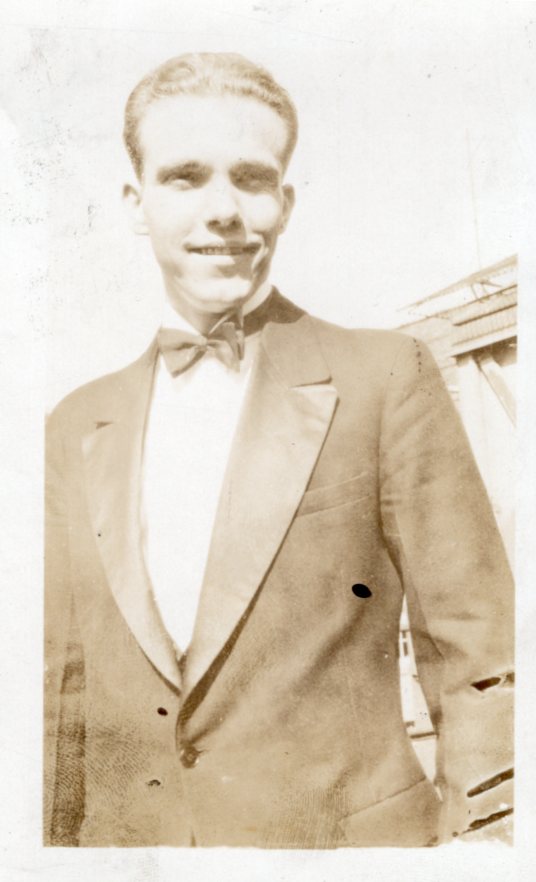
I did compliment my new husband on how dapper he looked in his tux, even if it was the same one he always used for conducting concerts and tails really shouldn’t be at a morning wedding.

And I did nudge my stepson to also dance with the former actress who had starred with Elvis the moment the DJ started playing “Love Me Tender,” my parents’ wedding song.  My discrete way of reminding Dad that no one could replace Mom.

But I needn’t have worried; Mom is irreplaceable.  And Mom was there.

“Of course she was there,” you’ll say when I tell you; you’ll comfort me with “She’s always with you, loved ones never really leave us.”

Yes, I know.  But not today.  Not on my wedding day.  Nothing would keep her from missing that.  She was there.

What I didn’t tell you is how my stepson suddenly grabbed both of my hands on the dance floor, turned his face up towards mine and blurted out, “You were with your mother now your mother is with you.” And then whirled away.   The stepson who had never met the mother I’d lost three years prior. The mother whose hospital room I never left for 30 days straight while cancer ravaged her.  The stepson whose arm I now grab in shock, challenging him, “What did you say to me?”  The stepson, who with the pure innocence blessed to children, looks squarely at me again and repeats simply, “You were with your mother now your mother is with you” before waltzing away.

My stepson Gabriel, the messenger, told me.  And now I’m telling you.

Posted in Biography, Geneology, History, Memoir | Tagged , , , , , , , | Leave a comment

The Hardest Thing

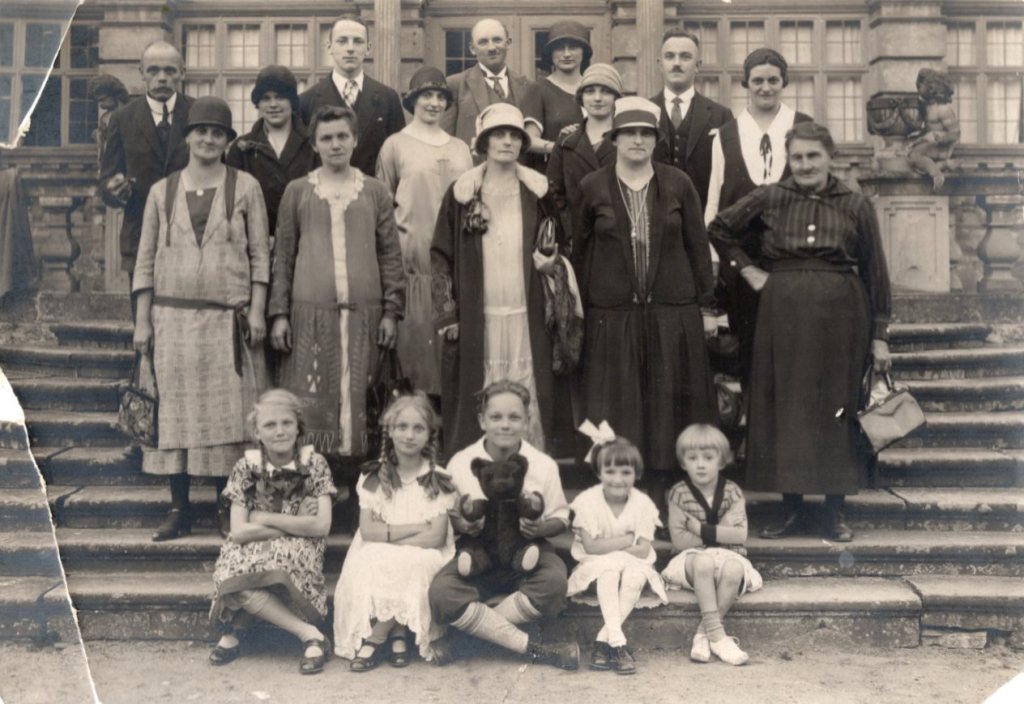
1926: Family photo during a relative’s return visit from the U.S…my grandmother in braids front row, second from left.

My two German cousins greet me at the undertaker. I’ve just come direct from Frankfurt airport to help prepare for my grandmother’s funeral.

“I picked out these clothes, don’t you think Oma will look so well?”  The first sister wants me to know she is taking the lead…but, I swear she has found the shabbiest items in my grandmother’s smart and tailored wardrobe. 

Now the other sister adds, “And I found this ring…I thought it was her wedding ring, but now I’m not sure.  There’s a date engraved, January 1939…but wasn’t your mother born in May?”

My eyes meet her look, her delivery coy.  Is she baiting me or does she really not know?  “Yes, my mother was born May 1939.”  I say no more, no less; I am not giving her the satisfaction of acknowledging her inference.  

She makes one more pass. “Maybe this ring meant something else.” 

“Yes. Maybe.”

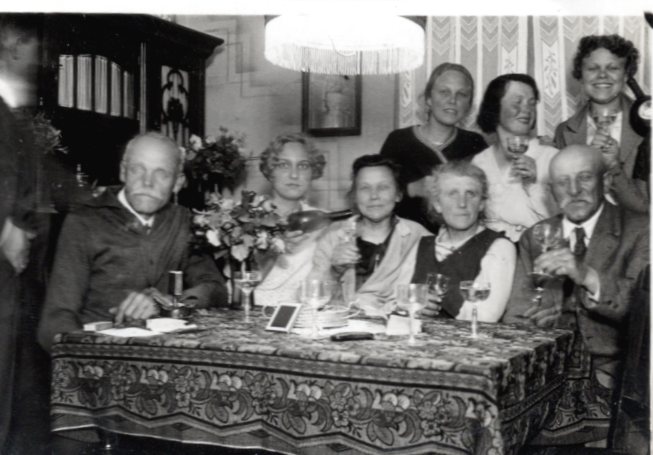
1933: 16-year-old Oma (between her parents), pouring wine to celebrate her sister Grete’s first return visit from the U.S. (Grete upper right)

Hmmm…what else doesn’t she know?  Just because I live an ocean away, am I the only one who knows these stories?  Like how my grandmother, the youngest of 11, almost came to the U.S. at 5 with her oldest sister Agnes, who intended to raise her as her own—recently married Agnes, who was hoping to relieve their bereft mother struggling with the grief of recently losing two children to typhoid while enduring the economic hardships of post-WWI Germany.

Surely my cousin can’t be the only one who noticed my grandmother’s obsession with reading and re-reading The Thorn Birds.  But does she know about the seminarian that grandma/Oma tried to follow when he left for Berlin…the one who subsequently disappeared under the Nazi regime?  The same teenager who defiantly climbed out her bedroom window to meet a beau on the night her father banned her from wearing earrings…the young woman with the piercing blue eyes who eventually met the police chief’s son, the dashing medical student on the fencing team…the eventual bon vivant and serial womanizer…my grandfather.

When most of my mother’s family immigrated to the U.S., they took many family stories with them…and spun new ones.  And then they had few or no kids.  And then they and the kids died.  And then the next generation of those left behind in Germany didn’t care. When my parents died, this only child became acutely aware she was the last one left in the family. Left with a treasure-trove of photos, letters and diaries…and no one to talk to.  The hardest thing when you are the gatekeeper of the family stories…and secrets…are the questions.  The questions you should have asked when you had the chance…and the ones you didn’t know to ask until it was too late.  Questions small and big.

Do I love Chinese food because my father ate well while running deliveries for a Chinese laundromat or because Chinese food was all my mother could stomach during her bedridden pregnancy with me?  Was I pre-destined to love to cook because I was named after the aunt who founded a bakery or because there were so many relatives in the food industry?  Do I jump at sudden noises, loud or small, because my five year old mother lived through an incendiary bombing obliterating her hometown?

When I reflect on what I remember, what was truth and what was bravado? When big personalities live even bigger lives, they are entitled to a bit of embellishment. They didn’t know the Internet and Ancestry.com would fill in the blanks decades later. 

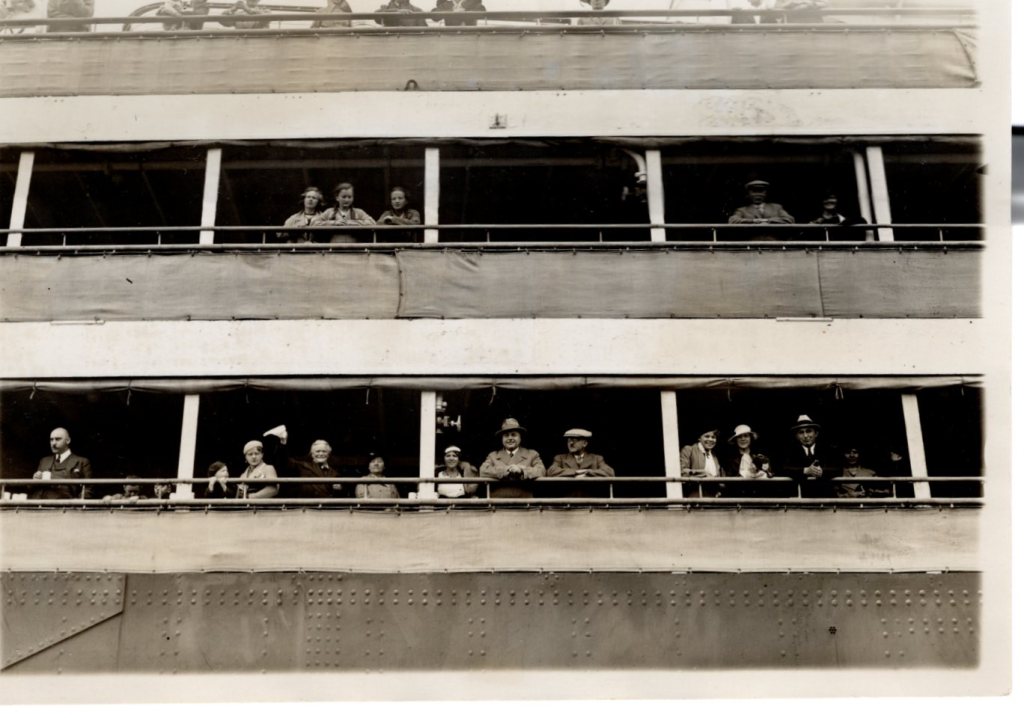
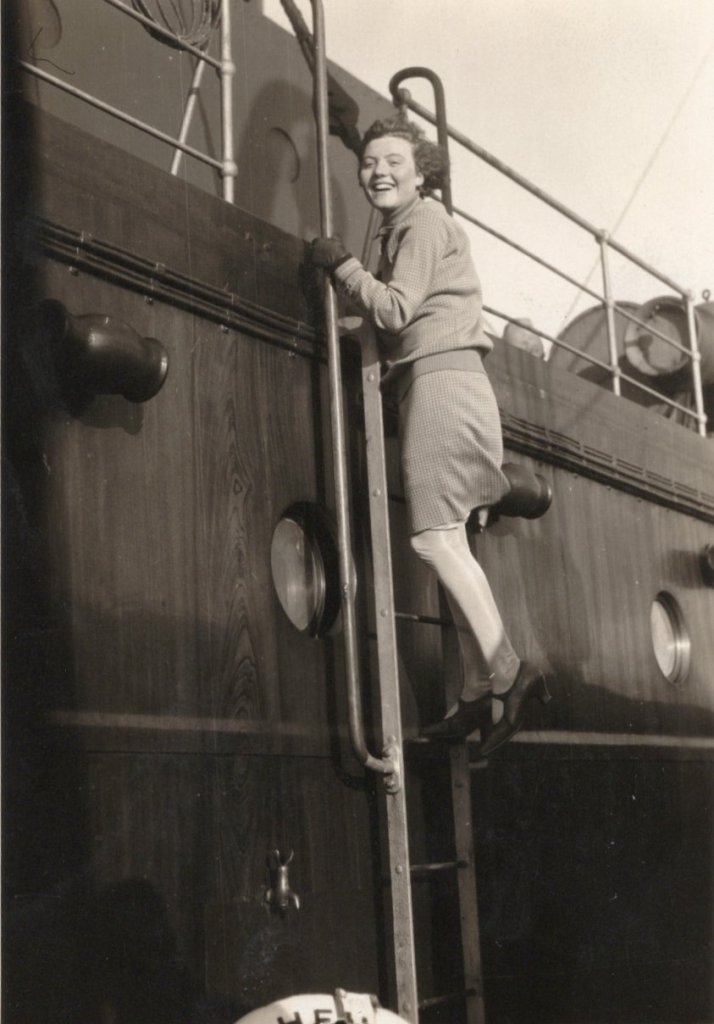
Why would a 16-year-old aunt (who claimed to have been a stuntwoman for silent films shot in Northern Germany) suddenly opt to have an American aunt adopt her, leaving her family behind forever…and what family would allow a 14 year old child—yes, the ship’s manifest revealed the truth—to travel on a boat overseas alone, never to return.

The same 80-year-old Aunt Erna, prim in her pin curls and pearls, would later regal anyone willing to listen with tales of Enrico Caruso serenading her at her restaurant after his Carnegie Hall performances.  How she would implore him to sing, and how…just for her…he would relent with one more song after a long night’s show.  As a child, I would beg her to tell the story over and over again.  Except I now know Caruso died in 1921…and she married my Uncle Henry, the restaurateur, in 1929…and their restaurant only opened in the 1940s…

During countless family gatherings, the same aunt’s secret stash of National Enquirer tabloid newspapers held 10-year-old me enthralled in another room while the adults debated whether a drop of water could ruin a roast or not; my Uncle Henry would hold court in the kitchen, flipping through his now lost restaurant recipe book while entertaining his audience with stories about ice sculptures dripping inconveniently before the advent of air conditioning.  Their banter would waft in to me astride scents of deliciousness—how the foodie adult now wishes I would have focused more on them and less on Elvis’ alien love child.

Once everyone is gone, who can confirm whether Estee Lauder really did try to recruit my aunts to help her sell the cream made in her garage?  Why did another milliner aunt leave a string of broken-hearted boyfriends behind in Germany only to eventually design hats for divas and dignitaries?  Who do you ask about the babies lost, the lives snuffed by pandemics and wartime, the life-changing decisions to leave everything and everyone behind.

I miss my large and vibrant family in all of their glorious colorfulness.  I crave the opportunity to talk to them again, to ask about their experiences in their own voices…rather than create a fiction to fill in the gaps. The hardest thing of all is the responsibility of being the last woman standing.

Posted in Biography, Geneology, History, Memoir, restaurants | Tagged , , , , , , , , , , | Leave a comment

Do You Know Where You Are Going?

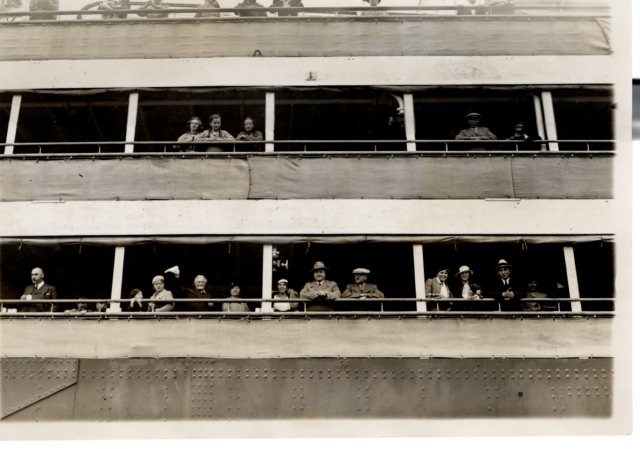
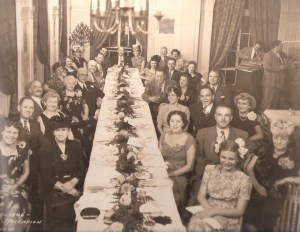
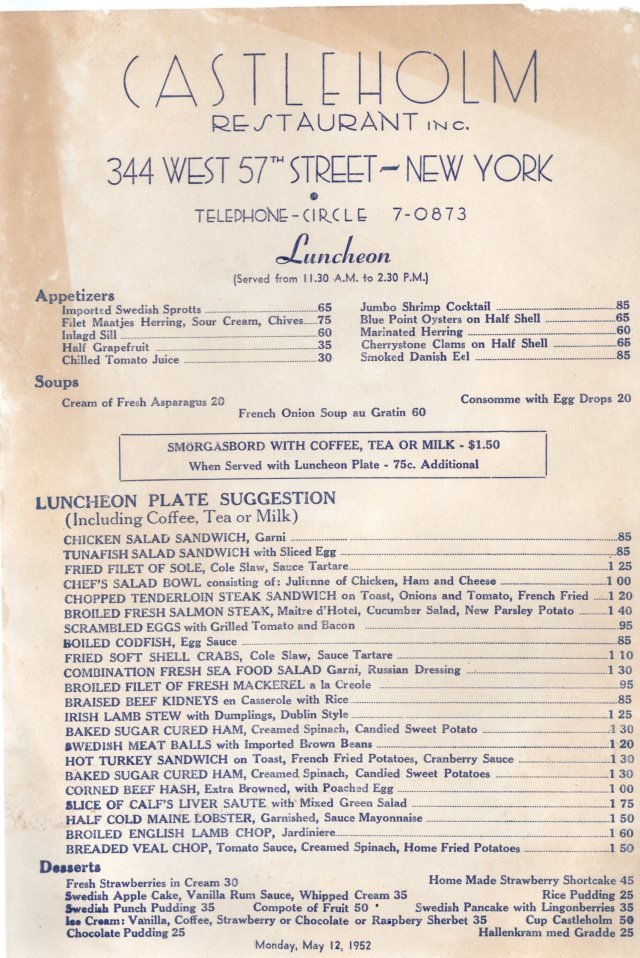
New York City, 1946.  A family gathers at the Castleholm Restaurant to celebrate a 70th birthday. They are all there, everyone who has immigrated from Bavaria, Germany since the early 1900s.  In less than a half century, they have started new lives and founded thriving butcher shops, bakeries, millinery and couture dressmakers shops, as well as well-known restaurants.

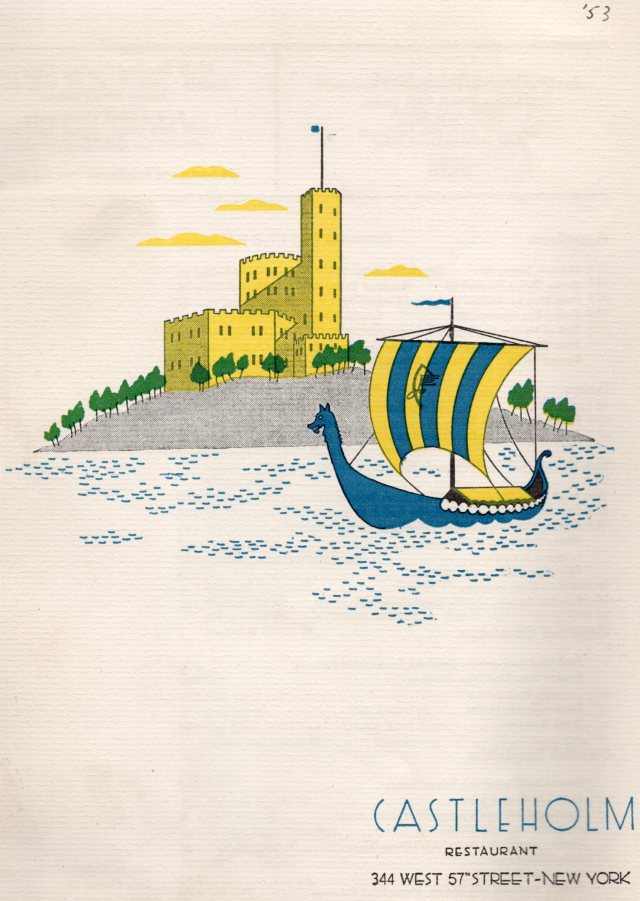
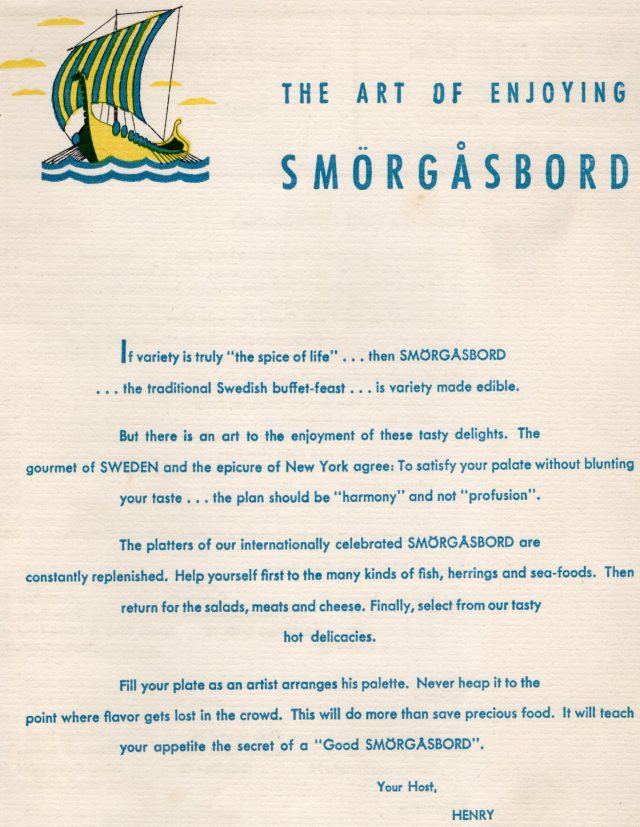
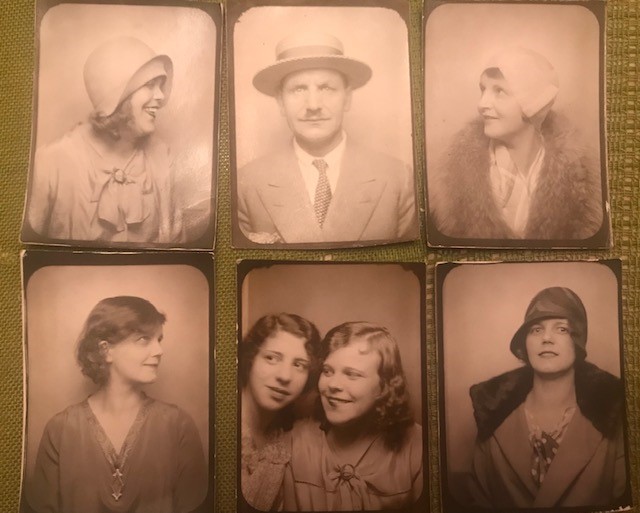
Most are from a family of eleven children, the eldest siblings coming to the U.S. after World War I.  The oldest brother finds success in the hospitality industry, eventually opening the unique Castleholm Swedish Restaurant. The grand Viking dining room becomes the gathering place to celebrate hallmark life events, all documented with photo portraits showing elegant groups of thriving people, photos duly mailed back to family overseas. Copies hung in houses on both sides of the Atlantic, hand-written notes inked on the back to make sure the recipient knew who everyone in the picture was.

As a child, I saw these duplicate images proudly displayed by great-aunts and great-uncles, here and abroad.  Whether or not I had actually met the people in the photos in my own lifetime, I most definitely, visually, knew all of them. The Castleholm photos became a roadmap to guide family storytelling, stories often repeated in both languages.  More often than not the Castleholm Restaurant played a major character role, becoming part of family legend and lore. My great-uncle Henry was the co-owner and manager; his wife, Aunt Erna, the hostess. They lived above the ground-floor restaurant in the same pre-war apartment building. Because the restaurant was close to Carnegie Hall, tales often featured the great performers of the day. These stories were told so many times they rolled over you as a matter of course, settling into your bones and becoming part of your DNA.

New York City, 2006: After aspiring to live and work in New York City, I land a position running a national medical association in mid-town Manhattan. But the organization is going through a turn-around period and signing an apartment lease has to wait. I bounce between a friend’s sofa, stale hotel rooms, and hard train seats on a two-hour train commute to stay with family.  In-town board meetings become late-night marathons, and the transiency wears me out. So it is with gratitude and relief that I accept a board member’s offer to use her vacant studio apartment as a place to land.

I take the key she hands me at the end of the latest board meeting, scribble down the address, and hop into a taxi with no expectations other than, finally, having a room of my own.  I call my mother to let her know my accommodations are set for the evening. “Give me the address where you are staying,” she asks sleepily.

I check my handwriting in the dim backseat light: “344 West 57th Street.”

My mother catches her breath, suddenly awake. “What was that address?”

I repeat, “344 West 57th Street.”

There is an odd sound to her voice as she responds, “Do you know where you are going?”

Annoyed with the question as a perceived reference to my habit of confusing uptown and downtown, I retort, “Of course I know where I’m going. I’m on the West Side, we just passed Carnegie Hall, I’m staying at Maria’s apartment.”

“That’s not what I meant. Do you know what’s at that address?”

Too tired for circular conversations, I simply ask, “No, Mom. What am I supposed to know about that address?”

“That’s where the Castleholm Restaurant used to be.”

Now it’s my turn to catch my breath. Despite all of the stories, I had never known the restaurant’s actual address.  Out of all the buildings on the island of Manhattan…for my first night living on my own in New York City, my family had brought me home.

Posted in Biography, Geneology, History, Memoir, restaurants | Tagged , , , , , , , , , , , , , , , , , | 1 Comment

Fashion

This article was originally published on The Wondering Woman Wanders and has been reprinted with permission.

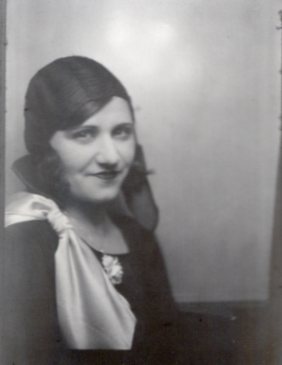
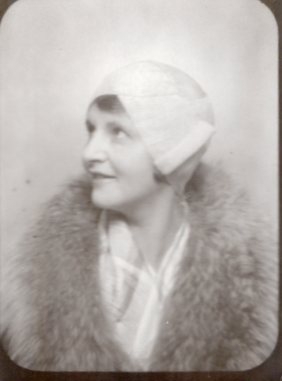
Fashion.  My head is filled with fashion. A-lines and ascots, cloches and collars, buckles and bows, sashes and swirls.  House moves are like archaeological expeditions into the core of your soul. And my own recent move has unearthed its own treasure trove of family photos, Vogue magazines, and enough carefully saved clothing to send one’s imagination dancing across styles and decades…

I come from a long family line of frugal fashionistas.  Frugal out of necessity, fashionista as a form of aspirational expression.  From them, I learned to dress to express where you wanted to go, who you wanted to be. 

This went beyond dress for success: this was dress to manifest. 

While all of my great-aunts could sew, embroider, knit, and crochet, each was trained to do so at a professional level.  Hand-me-downs were never considered a hand-out, they were a design opportunity for this group of dressmakers and milliners.  Over the decades, dresses and fabric traveled back and forth across the Atlantic, as well as down through generations.  Change the buttons!  Add a bow, sash, scarf!  Remove the seams, salvage the fabric, reinvent! 

As a dressmaker, my great-aunt Aunt Agnes could replicate a Vogue dress in a heartbeat, keeping any family member benefiting from her skills (like my mother in her early 20s and even me as a toddler) looking like they had just casually emerged from a Parisian photo shoot.  As the baby who was always grabbing her pop-pearl choker necklace…and then the little girl watching, leaning against her dressing table as she carefully dabbed on Caron’s Nuit de Noel from art deco cut crystal perfume bottles…she was, to me, Coco Chanel personified, even before I knew who Coco Chanel was.  I remember playing dress-up with her 1950s petticoats and slips, which were elegant enough to convince a five year-old she was a golden taffeta princess.  As a young professional, I proudly wore her red Chanel-knock-off-box-jacket-style suit to meetings, knowing my mother had also worn it before me–at the same age–to her job. 

While my fashion-influencing great aunts patterned me in the classical style, they could not inspire me to work wonders with their ever-present stash of notions and fabric scraps.  In fact, one of my greatest life embarrassments was my own brief encounter with a sewing machine during sewing classes, summer of seventh grade.  Mom had such high hopes:  given the talent surrounding me, surely my DNA hid a repressed designer awaiting empowerment for expression.  My genes did not.  My own designer dress was a sack, my self-made shirt had crooked seams, and every creation I produced seemed to favor shades of brown.  That summer’s Cape Cod vacation photos, in which I am wearing the fruits of my labors and sporting my new over-sized pink-framed prescription glasses, are quintessential tween horror show material. 

To my further embarrassment, even my usually encouraging mother pronounced my sewing skills abysmal.  She closed up and abandoned hope for the Singer sewing machine she had installed in my bedroom. Instead, she placed a 1930s Remington typewriter atop the abandoned sewing cabinet. And so began many sleepless household nights to follow, as the anticipated sewing machine’s whirl was replaced by my creativity’s clatter-song moving in a new direction…

Posted in Biography, Geneology, History, Memoir | Tagged , , , , , , , , , , , , | Leave a comment

Crossing Carmine Street

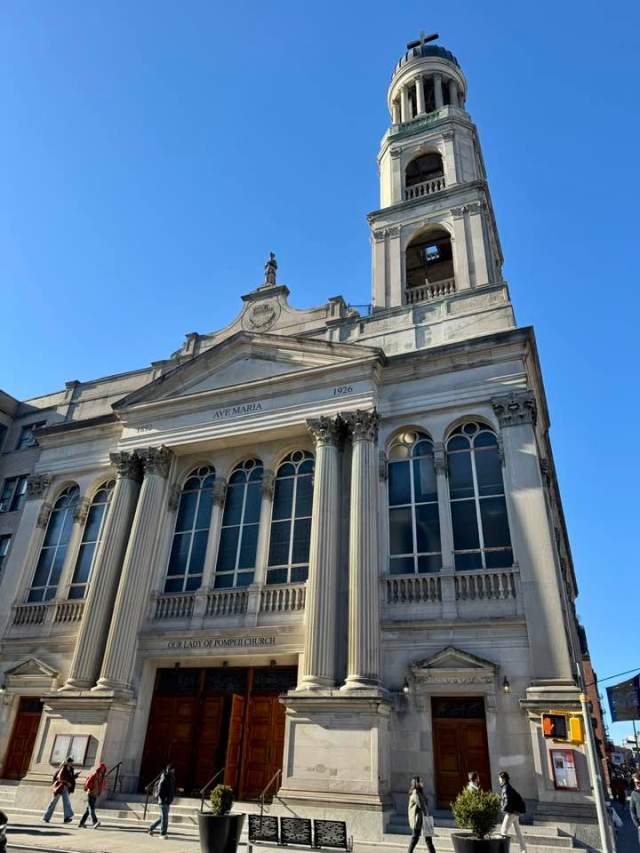
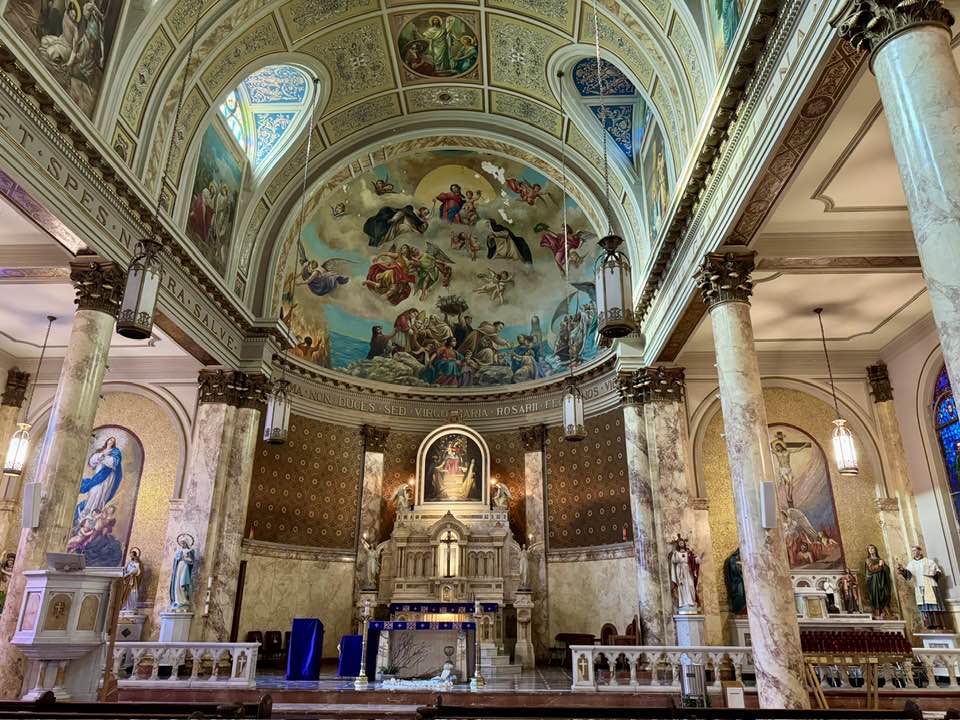
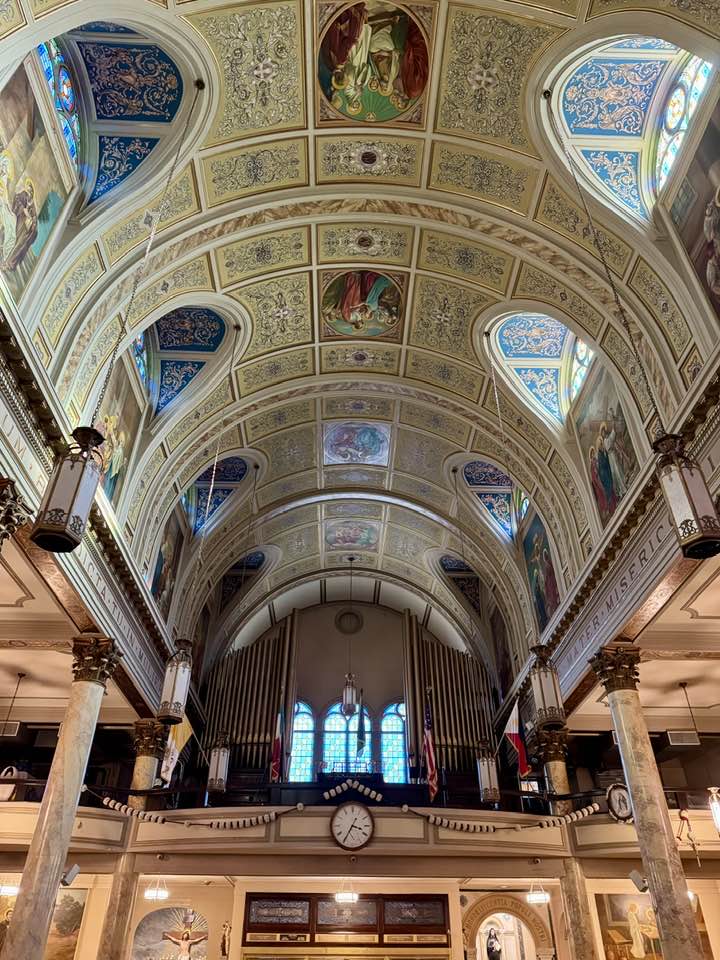
After watching “A Complete Unknown” recently, I had an itch to go back to Greenwich Village, NY–particularly the West Village, where my grandmother and great-grandmother lived. Standing in front of Our Lady of Pompeii yesterday…the church where my parents were married…I’m instantly seven years old again…

It’s the corner I remember coming out of the church with my grandmother and meeting my great-aunt Marie—a tiny sparrow of a woman whose fingers pinched my cheeks so hard (“What?!? This is Joseph’s daughter?!?”), I was convinced the red mark were permanent. Her husband, my Uncle Albert and my grandfather’s brother, was a mountain of a man (at least to my child’s eyes), who taught me to dance the polka at Our Lady of Vilnius Lithuanian community parties by standing on his giant feet while he whirled me around. I begged him to do it again and again. He worked in the diamond district and helped my father pick out my mother’s engagement ring. Everyone is gone, now. That little Lithuanian church tucked next to the Holland tunnel is sadly also gone, the community it served scattered well beyond Greenwich Village, and the lure of prime real estate led to its replacement with high-end condos.

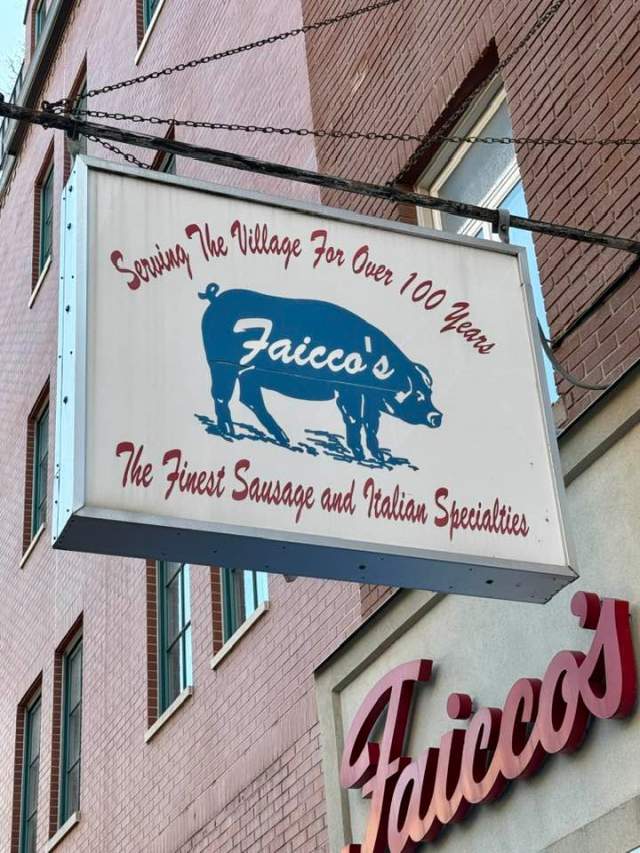
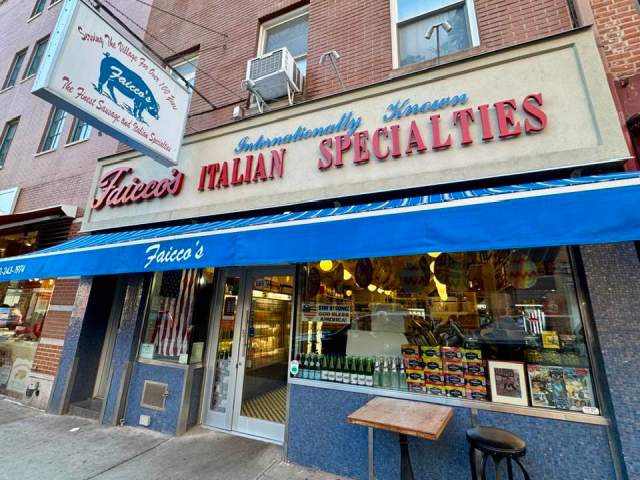
With cheeks still stinging, I remember going with my grandmother to the pork store around the corner and being fascinated with the fragrant rows of hanging salamis and aging ham hocks…it was my first time tasting a slice of salty, melt-in-your mouth paper-thin prosciutto, and thinking I’d found Nirvana. Thereafter, she never came to visit us in New Jersey without bringing me a precious package of wax-paper wrapped layered prosciutto slices that I would devour slowly, deliberately, one slice a day to make it last as long as possible.

Ah, how I love savoring “Old New York” moments…

Posted in Biography, Geneology, History, Memoir | Tagged , , , , , , , , | Leave a comment

Longing (Sehnsucht)

Sehnsucht…

I believe German words are the best conveyors of emotions. In English, Sehnsucht translates as longing or yearning; however, in German, the meaning goes deeper: “sehen” = seeing; “sucht” = search…searching to see something.

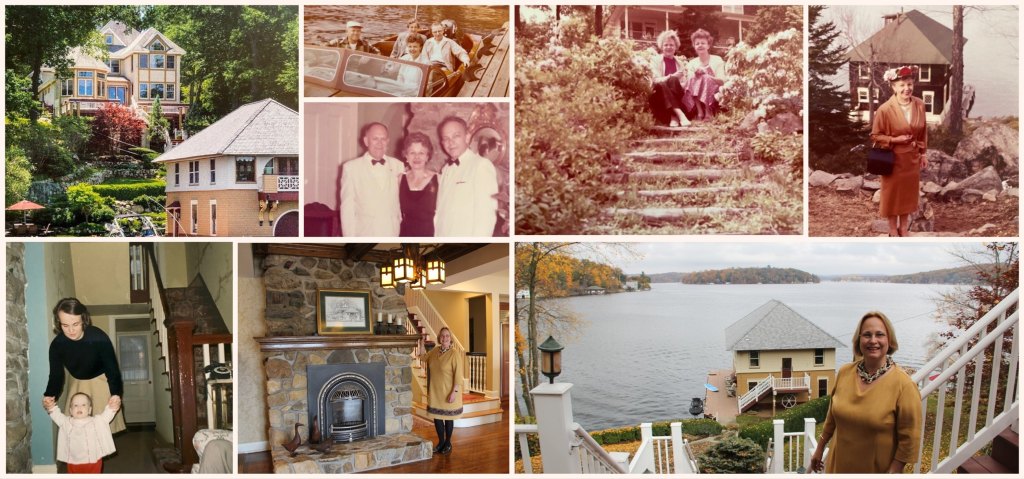
Sehnsucht: my soul-aching search to see my beloved great-aunt Agnes’ lake house one more time. My Aunt Agnes died of cancer when I was 6. It was a Covid-like death-separation–after years of constant interaction, one day she was my everything…the next day she was gone. And so, too, disappeared my access to the enchanting house that had been a family focal point since the 1950s.

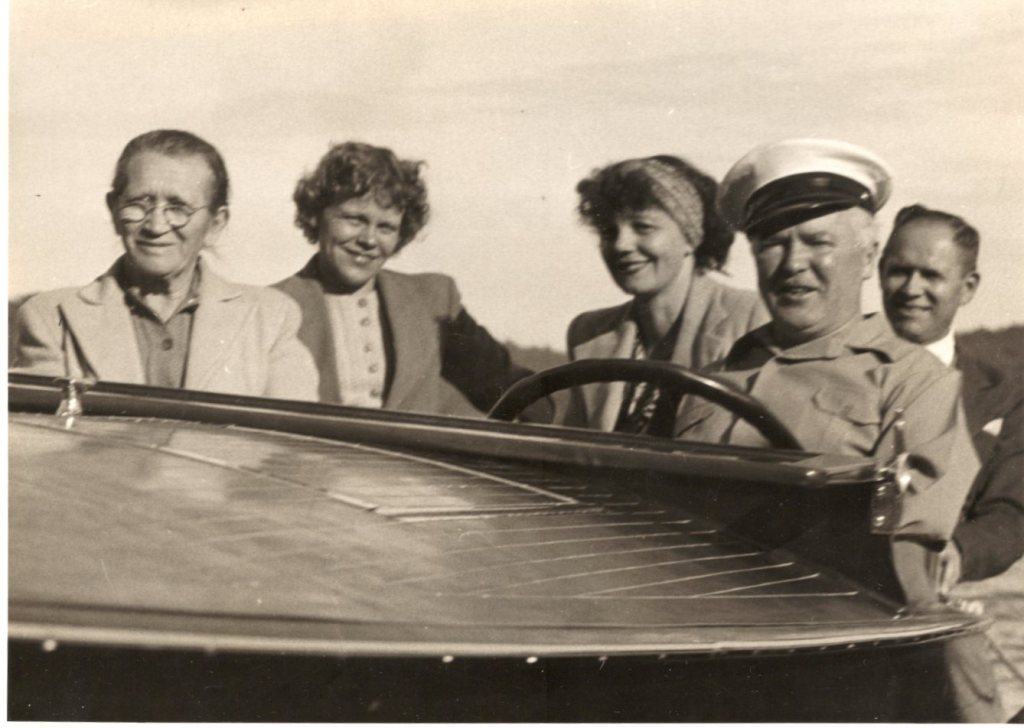
As the eldest of 11 children born in Bavaria, Aunt Agnes was the family matriarch for her U.S.-based siblings, the glue that held together all of the German relatives who had immigrated. Perched on a hill overlooking a grand lake, her house hosted every important family gathering over decades and across generations. It was the destination for a weekend away or a water-sport-filled vacation. From the adjoining boat house, after gathering for cocktails and pictures by the fireplace, the family would set off in wooden Chris-Craft boats for black-tie events at the social club or visits to friends and family living around the lake.

The house saw my first steps; and within it, my eyes witnessed the first moon landings and walks; off its boathouse I learned to swim. Aunt Agnes was my very own personal ”Auntie Mame”: an aspiring fashion designer and former boutique owner, her sewing machine could produce marvelous confections, keeping the family well-outfitted in haute couture-knock-offs; the clothing trunks in her attic were my childhood dress-up treasure trove. Her kitchen was always buzzing with projects and cooking–visiting her was magical. I remember studying her every movement with the wide-eyed admiration of a child for a fairy godmother.

Then, in 1971, it came to a screeching halt.

Without her magic fairy dust to hold them together, family members scattered and relationships crumbled. My beautiful idol was lost to me…forever imprinted on my very being with a longing and a hurt that lasted all of my life.

Before my Dad passed recently, I asked him for my Aunt’s address, but he had since forgotten. Yet, the house was seeking me too: upon his passing, I almost immediately discovered in his attic my Aunt’s will with the house address. A Google search quickly yielded a new property sale listing–surprisingly, only a few days prior the newly renovated home had been put on the market!

Thanks to an understanding and obliging realtor, I scheduled a tour and was finally able to quell the decades-long Sehnsucht that had my heart yearning to see the family homestead just one more time.

Rest in Peace Aunt Agnes…and thank you.

Posted in Biography, Geneology, History, Memoir | Tagged , , , , , | Leave a comment

Cranberry Bread

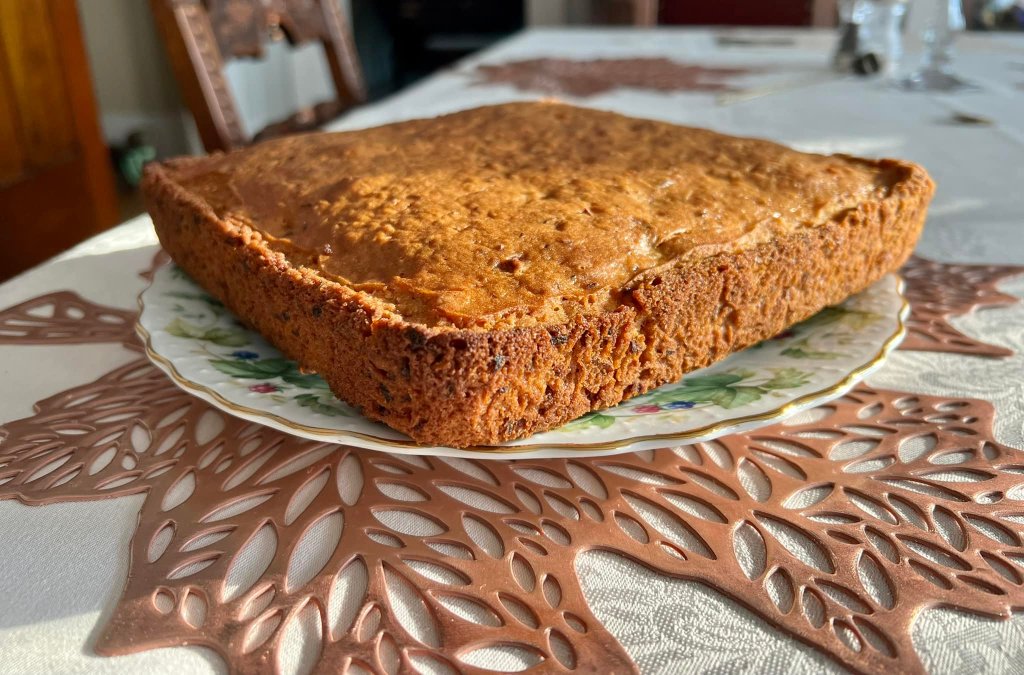
Of all the cherished Thanksgiving memories and traditions, the strongest one for me is Mom’s famous cranberry bread. Or, more precisely, according to the actual recipe, “Grandmother’s Famous Cranberry Bread.” Except, that it’s neither.

The dog-eared, decades-old family recipe, faithfully pulled out every Thanksgiving, is actually written in the haltingly perfect cursive of a child learning to write–my careful copying from a library picture book, a recipe I begged Mom to make one Thanksgiving. It was so fabulous it instantly became a family tradition, a project for Mom and me to share every year. Mom would faithfully mix the ingredients, while I tediously chopped nuts and cranberries in the handheld chopper that left my red welts on my palms for many hours afterwards. Thankfully, the food processor now makes quick work of the matter. Others may enjoy cleaning bowls of cookie dough, however, my childhood joy was licking the spoons after cranberry bread baking.

The bread was Mom’s gift giving specialty every holiday season, every family occasion…and it’s the one recipe I make faithfully now every year and also gift to show my greatest affection to the recipient given that I know the decades of love that go into it.

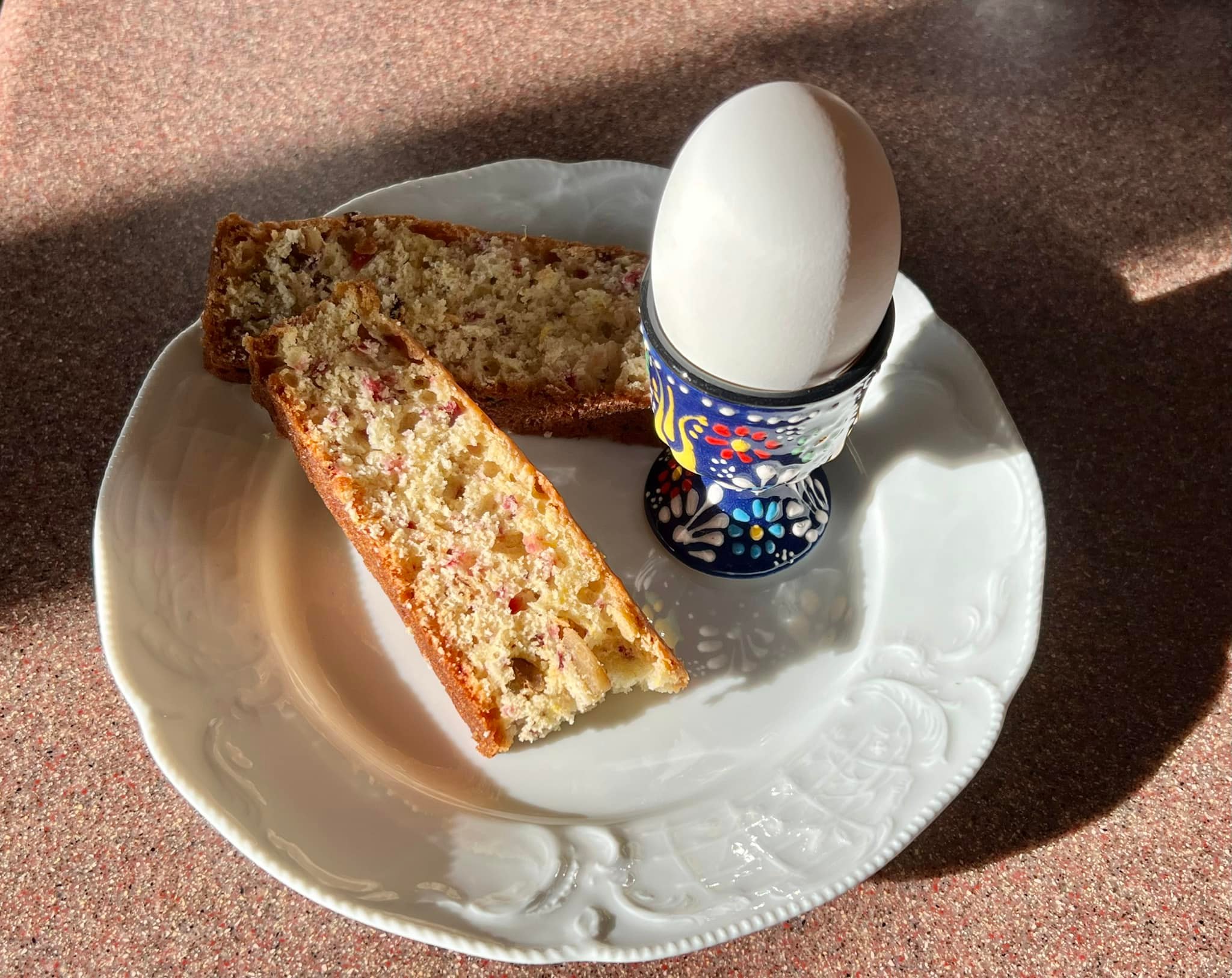
So, as I take a moment to enjoy the quiet before the Thanksgiving cooking marathon, I honor Mom with a first bite of cranberry bread on her prized china, a set my grandmother sent from Germany–piece by piece over many years–until we finally had a full service that Mom could proudly display every holiday. My wish for this holiday season is that we cherish those we love who are with us…as well as those who are still close in spirit…and strive to share and create new memories for future generations to one day reflect on and cherish all the same.

Peace, love, and grace to all of you this Thanksgiving.

Posted in Uncategorized | Tagged , , , , | Leave a comment

Love in a Cup

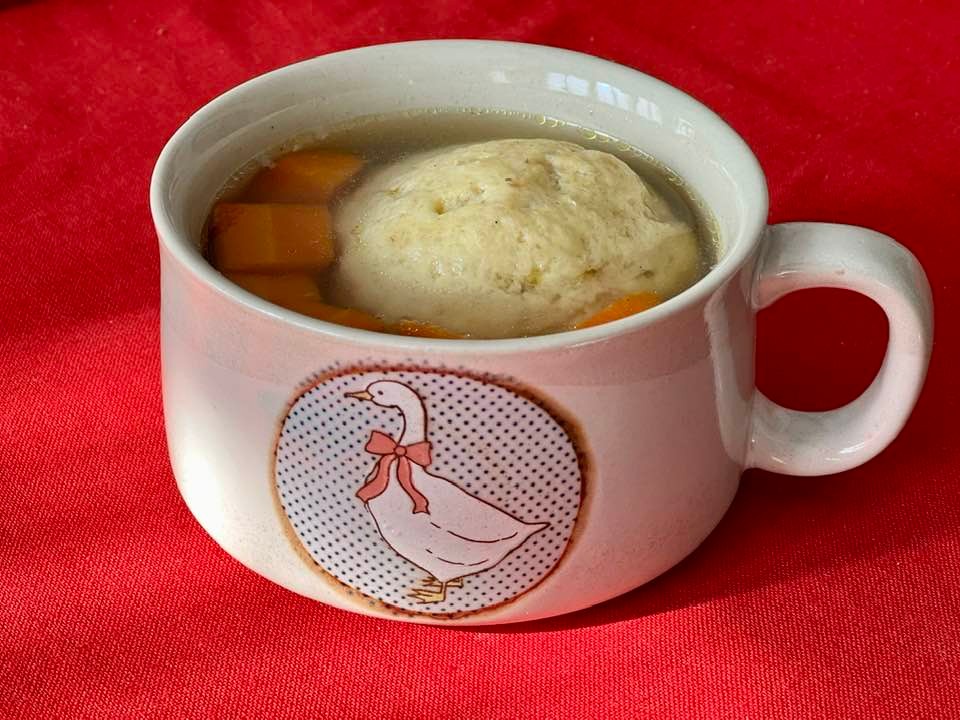
Nothing says love in a cup to me like matzo ball soup, my ultimate comfort food. Let others extoll the childhood virtues of coming in from a cold day of snow play to warm up with tomato soup and grilled cheese sandwiches…matzo balls and homemade chicken soup were what I’d beg my mother for. As I got older, it was warming up during the winter “girls’ outings” to New York City with my mother: trips to watch foreign movies at the art movie house near Lincoln Center that were always preceded by lunch at the nearby Jewish deli: a full-on sensory experience with baseball-sized matzo balls swimming in piping hot broth, mountainous pastrami and rye sandwiches, and sassy waitresses calling out orders that reverberated off the hammered tin ceiling. I loved those cold weather outings with Mom, which later evolved into opera nights preceded by dinner at Cafe Fiorello across from the Metropolitan Opera house. The first time we went to Fiorello’s, I commented to my mother what a shame it was that the deli was no more…to which she said, “Look up!”…and I suddenly saw the hammered tin ceiling…so, on this cold day, I’m in the mood for a bowl of soul food as I ladle Mom’s chicken soup recipe over my own fluffy matzo ball

Posted in Uncategorized | Tagged | Leave a comment

The Memory of Loss

Family Portrait, 1905 Karl, Rose, Great-Grandmother, Great-Grandfather, Betty and Agnes (l to r)

Family Portrait, 1905
Karl, Rose, Great-Grandmother, Great-Grandfather, Betty and Agnes (l to r)

My urge to pursue a career in medicine comes from my maternal grandfather, a family doctor. My specific interest in neurological diseases could also be considered hereditary. Over the years, I watched how cancer and neurological diseasesnamely Parkinson’s Disease and dementia—wove their way insidiously through the gene pool of the eleven siblings in my maternal grandmother’s family. My grandmother was the youngest. When she passed in 2012, she had nearly reached the age of 95. She prided herself in staying active, traveling, and keeping a youthful outlook. Despite always acting much younger than her age, in the end her genes betrayed her: her final years were overshadowed with battling the ravages of breast cancer and dementia at the same time.

Her parents, my maternal great-grandparents, married in Bavaria, Germany in 1899. Their first child, Agnes, was born in 1900.  My grandmother, the youngest, entered the world in 1917, near the end of World War I.  Over the span of nearly two decades between the oldest and youngest, the family grew with the births of eleven children.

Four of these eleven great-aunts and great-uncles I never had a chance to meet. Christl, the ninth child, died as a baby. Rose, the fourth, died of cancer shortly after I was born.

And then there were Karl and Betty, the second and third children, respectively. Both were lost, tragically, within a year of each other. Their deaths precipitated a deep family feud that was never forgiven…

Because they died so young, their stories came in scattered fragments and without much elaboration. One fact was consistent, though: Karl and Betty were my great-grandfather’s greatest pride and joy. Not that my great-grandfather didn’t cherish all of his children; however, these two had particular gifts. While the siblings each came to demonstrate unique skills and creativity in areas such as design, culinary arts, dressmaking, and millinery, Karl’s special gift was music…and it blossomed early. His virtuosity with the violin earned him enrollment at a prestigious music conservatory, and his father could not have been prouder of the honor bestowed upon the young protégé.

Betty’s gift was her ethereal beauty. It is said that Kaiser Wilhelm II once came to visit the village were the family lived and where my grandfather was a respected town elder. As the Kaiser was greeted by the villagers, a child said to be as beautiful as an angel caught his eye in the crowd. He inquired about the child, calling her forward. Betty was presented to the Kaiser.  He complimented her beauty, expressing his hope that when she was older he might meet her again at his court, as the court would be much enhanced by her loveliness.  The family was greatly honored by this royal praise for the young girl.
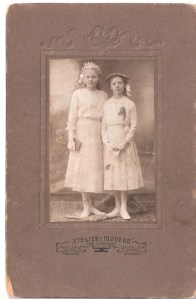
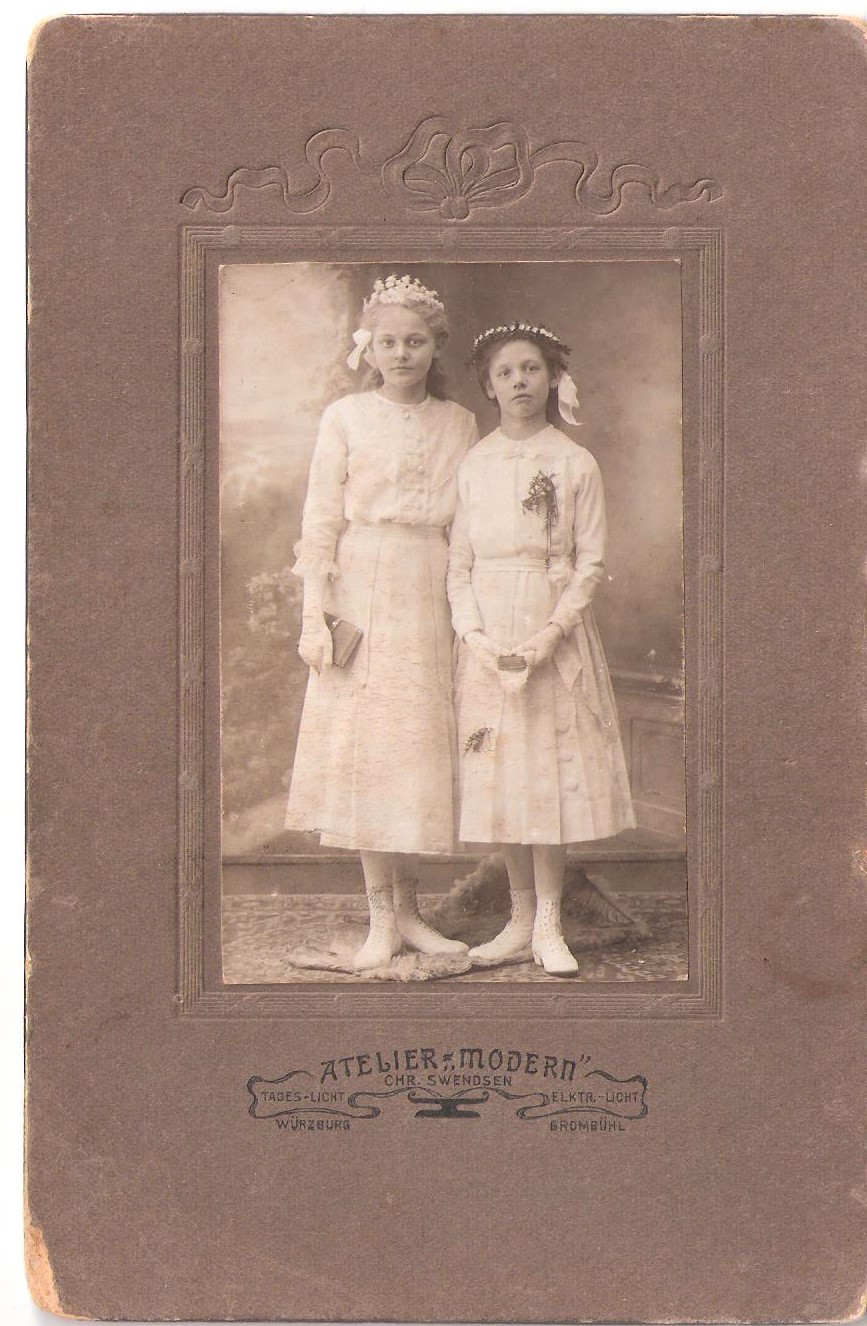
First Communion Portrait of Betty (left) and unidentified girl.  About 1910.

First Communion Portrait of Betty (left) and unidentified girl. About 1910.

With any large and close-knit family, there inevitably comes a moment when a family member arrives seeking help and possibly refuge. Maybe it had to do with the “Great War” — a husband away or a spouse lost at the Front. Or perhaps it was something else. That part of the story remains a mystery. What is known is that the growing household of two adults and nine, possibly ten children, ranging from teenagers to tiny toddlers, took in one more adult. Whether she moved in as a much needed set of additional hands or simply a family member in need, she was welcomed into an overflowing household, taking up residence in the top room of the three-story home.

While the visitor may have been keeping her own company in her room under the rafters, the impact of her arrival was soon to be felt like an earthquake. How the sickness first presented itself, when the family realized what was upon them was never discussed. The outcome remained the same:  just a few months after the birth of my grandmother and with a suddenness that took the family by surprise, Betty fell ill…and failed quickly. At first, it was probably a slight slow-rising fever with general malaise, headache and cough; it may have even gone unnoticed given all of the activity in the house. But, by the second week, the fever would have raged out of control, with the onset of delirium and intestinal problems. Most likely, the third week of fever is when she succumbed, the unfortunate victim of an illness for which the War raging around them had just produced a vaccine not yet publicly available. On August 5, 1917, Betty died of typhoid fever. She was not yet fourteen.

One can only imagine the shock this death inflicted on the family. A tragic loss at the height of the Great War; certainly the times were already stretching the family’s reserves, resources, and resolve. As they moved forward from the loss, the time for grieving was likely consumed by the unrelenting needs of an infant and rambunctious toddlers. It was barely a year before it happened again. Stealthily, quickly, and without warning, Karl fell ill like his sister before him…and, in an instant, was gone. His life and musical promise were lost on May 25, 1918, just a few weeks shy of his seventeenth birthday.

Typhoid does not just appear: it usually spreads from person to person, with hygiene and sanitation the best way to prevent it. With two children impacted, the signs now pointed to a close source for the virus. Eventually the quest for answers led to the truth: the visitor living under their roof was a typhoid carrier—she had been harboring the virus in her own body without showing any signs of illness or becoming sick herself.

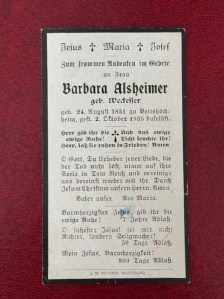
Upon learning the source of the deadly virus, my devastated great-grandfather flew into a rage. He threw his guest out of the house, and cursed her and her family for bringing this illness into his home. His rage solidified a permanent rift in the family-tree, preventing anyone from that branch of the family from being welcomed under his roof during the remainder of his lifetime.

I have heard it said that my great-grandmother was never the same afterwards. She sought refuge in the quiet of the barn with the milking goats, keeping her own peace, possibly seeking the solitude she needed to cope. I find myself looking at the family portraits taken before and after the loss, noticing that my great-grandfather, an arrow-straight-standing gentleman, no longer stands quite as tall. My great-grandmother’s face, particularly stoic in most portraits, becomes especially drawn-looking. They both lived through battles fought afar and on their own homefront; they may have survived, but a battle-weariness endured.

Summer 2009: I am sitting in my grandmother’s living room in Germany. I have just arrived bearing cake from the bakery and am awaiting her teapot’s whistle announcing water has boiled. I am visiting for “Kaffee und Kuchen” – afternoon coffee and cake – having ducked out of afternoon activities for a medical conference I am attending here, in my family’s hometown. Ironically, the top Germany research experts for the neurological disease I am involved with are based here, in this town…and they are hosting this conference for all of the other specialists from around the World. I am enjoying showing my professional colleagues the town I know as intimately as any tour guide, introducing them to the region’s wine and beer, and proudly showing off the many artistic and historical treasures found at every corner.

Best of all, I can slip away at least once a day and visit with my grandmother.

It has been two years since I have seen her. While physically she can still out-run me up and down the six flights of stairs in her elevator-less apartment building, mentally I am seeing evidence of dementia and several earlier strokes taking hold. Her past memories are sharp and perfectly coherent; however, her ability to retain current information is slipping away from her, and she is repeating things. But she is in good spirits and receiving the care she needs within her own home, so I happily relish the time I can share with her.

I prepare and pour the tea, and she inquires about my day. “How many people are at this conference?”

“About 400.”

She takes the plate with the slice of cake I offer her. “What?! So many? So, why are you here and not there?”

“Because I wanted to be with you.”

“And what is everyone else doing?” She is studying the piece of cake in front of her, not yet tasting it.

“Actually, this afternoon there are tours. One group is going to Sommerhausen, but I’ve already been there.”

“You’ve already been there, you don’t need to go,” she parrots back to me, a bit distracted.

“And the other group is going to the Alzheimer House.”

Her head snaps up from her plate, suddenly she’s fully engaged: “Why would they want to do that?” she challenges.

“Well, I guess since they are a bunch of neurologists, someone thought it would be interesting for them to see Dr. Alzheimer’s house because of Alzheimer’s disease.”

My grandmother becomes agitated. “Why would they want to go to your Aunt Alzheimer’s house? Your grandfather hated that woman.” I’m not sure what to think of her comment; but, before I can react, she has started to make a mental loop through the conversation again, repeating: “Why are you not at the conference this afternoon?”

I offer once more: “Because the neurologists are taking a tour of the Alzheimer House.”

Her reaction is just as abrupt as before; she freezes, and demands again: “Why would they do that? Your grandfather hated that woman.”

But the mental loop her dementia has her caught in does not let her elaborate on her sudden outburst, and I am left with a curious revelation: are we related to Dr. Alzheimer and the Alzheimers?

I query my mother the next morning during a quick call back to the U.S.: “Are we related to the Alzheimers?”

“Your grandfather hated those people,” my mother responding with the same vehemence as my grandmother, taking me completely by surprise.

“So we are related to the Alzheimers?” I ask again, incredulous.

“Of course,” my mother retorts. “Your Aunt Alzheimer was the one who carried typhoid into the house. Your grandfather never forgave her and the Alzheimer family for losing his children.”

Ironically, I have discovered that the name associated with the loss of memory hasfor my familycome to represent the memory of loss.

Posted in Uncategorized | Tagged , , , , , , , , | 5 Comments